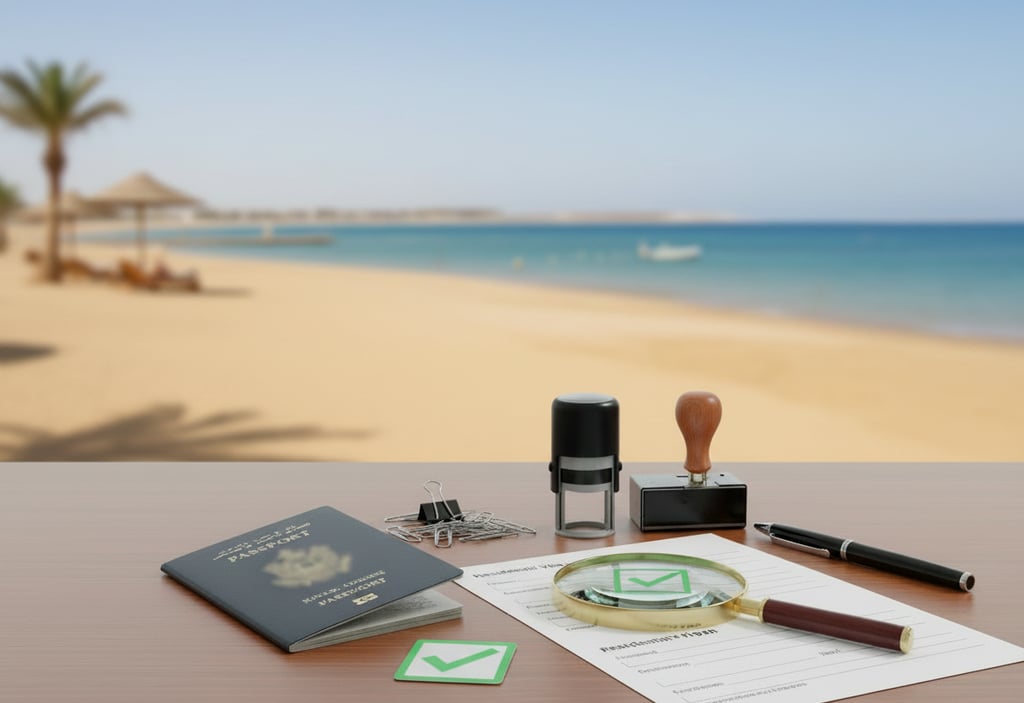
Residential Visa in Egypt
Everything Foreigners Need to Know
Discover how residential visas in Egypt work, including visa types, application process, renewals, property ownership, and expat life in Hurghada and the Red Sea.
Egypt continues to attract foreign residents thanks to its warm climate, affordable lifestyle, investment opportunities, and rich cultural heritage. However, there are still many misconceptions surrounding residential visas and long-term living in the country. Here’s a clear and updated overview of how residential visas in Egypt actually work and what foreigners should realistically expect.
What Is a Residential Visa in Egypt?
A residential visa is an official permit that allows foreign nationals to legally reside in Egypt for an extended period. It is commonly required for individuals who plan to live, work, retire, invest, or purchase property in the country.
Egypt offers several main categories of residency visas:
• Temporary Residency Visa – usually issued for shorter stays, often up to 6 months.
• Long-Term Residency Visa – suitable for foreigners planning extended residence in Egypt.
• Investor Residency Visa – designed for property buyers, business owners, and investors.
The Biggest Misconception
One of the most common myths is that residency is automatically granted upon arrival in Egypt or lasts indefinitely. In reality, every residency visa has:
• Specific eligibility requirements;
• A defined validity period;
• Renewal conditions;
• Required supporting documentation.
Understanding the process beforehand helps avoid unnecessary delays or legal complications later.
Common Documents Required
While requirements vary depending on the visa category, applicants are commonly asked to provide:
• A valid passport;
• Passport photographs;
• Proof of address in Egypt;
• Financial documentation or proof of income;
• In some cases, property ownership documents, marriage certificates, or employment contracts.
How the Application Process Works
Applying for residency in Egypt can involve several administrative steps, especially for first-time applicants. Applications may be submitted either through Egyptian consulates abroad or directly through immigration offices inside Egypt.
To make the process smoother, applicants should:
• Ensure all documents are complete and accurate;
• Apply well before visa expiration dates;
• Keep copies of all submitted paperwork;
• Be prepared for occasional bureaucratic delays.
Many foreigners choose to work with legal advisors or experienced agencies familiar with Egyptian residency procedures.
What Is It Like Living in Egypt?
Living in Egypt offers a unique blend of modern convenience and historic culture.
Popular advantages include:
• Warm weather all year round;
• Affordable property prices;
• Lower living costs compared to many European countries;
• Expanding international communities;
• Beautiful Red Sea coastal destinations.
Adapting to Egyptian culture and daily life is important. Learning basic Arabic phrases and understanding local customs can make integration much easier.
Visa Renewals and Expat Rights
Most residential visas in Egypt require periodic renewal. Applications for renewal are generally recommended at least one month before the visa expiry date.
Foreign residents in Egypt may have access to:
• Healthcare services;
• Property ownership opportunities;
• Banking services;
• Business and investment activities, depending on visa type and legal status.
Staying informed about changing immigration regulations is essential for maintaining legal residency status.
Final Thoughts
Obtaining residency in Egypt is entirely achievable when approached with the right preparation and realistic expectations. For many foreigners, Egypt becomes far more than just a holiday destination — it becomes a second home offering lifestyle benefits, investment opportunities, and a strong sense of community.
With proper guidance and updated information, the residency process can be significantly easier and more straightforward than many people initially expect.