Buying Property in Egypt: 14 Important FAQs
Complete guide to buying property in Egypt for foreign buyers. Learn about ownership, contracts, maintenance fees, rentals, resale, and legal steps.
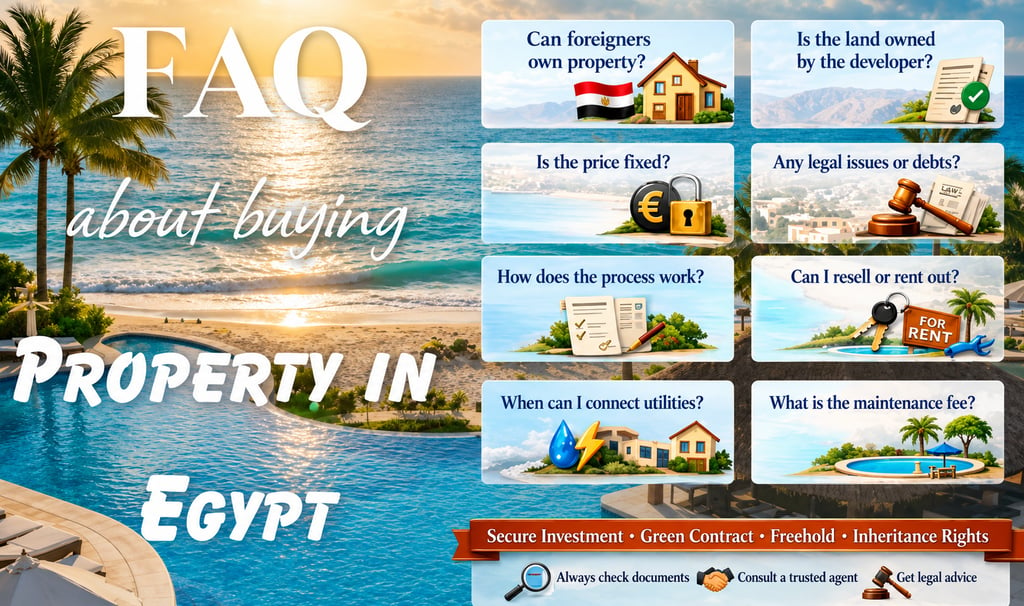
1. Can I own property in my own name?
Yes, foreign buyers can own property in Egypt.
Most projects operate under a Green Contract + Freehold system, which allows the property to be secured in your name.
You can also choose to register the property through the court for additional legal security, although this is optional and involves extra time and cost.
2. Is the land owned by the developer?
In reliable projects, the land is fully owned by the developer.
It is always recommended to request land documents to ensure everything is legally clear.
3. Are there any debts or legal disputes?
In reputable projects — no.
However, it is always recommended to:
• request documentation
• consult a lawyer if needed
This is standard practice when buying property in Egypt.
4. What is the purchase process?
The process typically looks like this:
• Signing a reservation agreement
• Paying a reservation fee (which secures the unit and fixes the price)
• Paying the down payment (within a maximum of 21 days)
• Signing the sales purchase contract
• Continuing with the agreed payment plan
All payments are made directly to the developer.
5. Is the price fixed?
Yes, once the reservation agreement is signed, the price is fixed.
Even if prices increase later, your agreed price remains unchanged.
6. Can I register the property through the court?
Yes, this is possible.
• Timeframe: approximately 2–4 months
• Requires a lawyer
• Involves additional costs
This step is optional but available for buyers who want extra legal protection.
7. When can I connect water and electricity?
After construction is completed and you receive your keys.
Typically:
• meter installation costs around €300–500
• after that, you pay based on actual usage
Average monthly cost: around €20–30.
8. Are all construction permits in place?
Yes, with reliable developers all permits are in place.
You can request:
• building permits
• land documents
• project documentation
9. What happens if construction is delayed?
This is clearly outlined in the contract.
Typically:
• a grace period is included (usually around 6 months)
• after that, penalties apply for delays
If the project stops, the buyer has the legal right to go to court and claim a refund.
10. What is the maintenance fee?
This is the cost for maintaining the resort.
Typically:
• around 10% of the property price
• paid once (lifetime payment)
It covers:
• security
• swimming pools
• cleaning
• landscaping
• maintenance of common areas
11. Can I resell the property?
Yes, in most projects:
• resale is allowed at any time
• even while the property is still on a payment plan
A transfer fee may apply (usually around 5%).
12. Can I rent out the property?
Yes, both long-term and short-term (tourist) rentals are allowed.
Important: you can rent out the property even while it is still under a payment plan
Some developments also offer property management services.
13. Can the property be inherited?
Yes, the property is fully inheritable.
You can also include beneficiaries (such as children) in the contract.
14. In which language is the contract?
Contracts are typically issued in English and Arabic.
It is recommended to:
• have a lawyer review the contract
• especially if this is your first purchase in Egypt
Important
Buying property in Egypt is a well-established and straightforward process, but as in any country, it is important to:
• verify documents
• work with a trusted agent
• consult a lawyer if needed